A music journalism study on HYBE Labels Japan’s leading group highlights their million-selling albums and strong ties to Japan. &TEAM’s rise as global chart-toppers and their milestone as the first Japanese group at the Grammy Museum mark a new chapter in K-pop’s international journey. Their story matters as global media spotlight Japanese acts shaping spaces traditionally led by Korean artists. It offers insights into industry trends and cross-border successes shaping the future.
By Julia Rebecca Velasco
When HYBE Labels Japan introduced &TEAM in late 2022, industry expectations pointed toward a traditional localized trajectory: securing domestic popularity before scaling internationally. However, the group—comprising K (Koga Yudai, &Team’s Performance Leader and the group’s oldest), Fuma (Murata Fuma, the sub leader aka 2nd in charge), Nicholas (Yixiang Nicholas Wang), EJ (Byun Euijoo, the group’s leader), Yuma (Nakakita Yuma), Jo (Asakura Jo),Harua (Shigeta Harua), Taki (Takayama Riki), and Maki (Riki Wilhelm Mauss / Hirota Riki, the group’s youngest)—diverged from this standard template by establishing a multi-market, global operational footprint from launch.
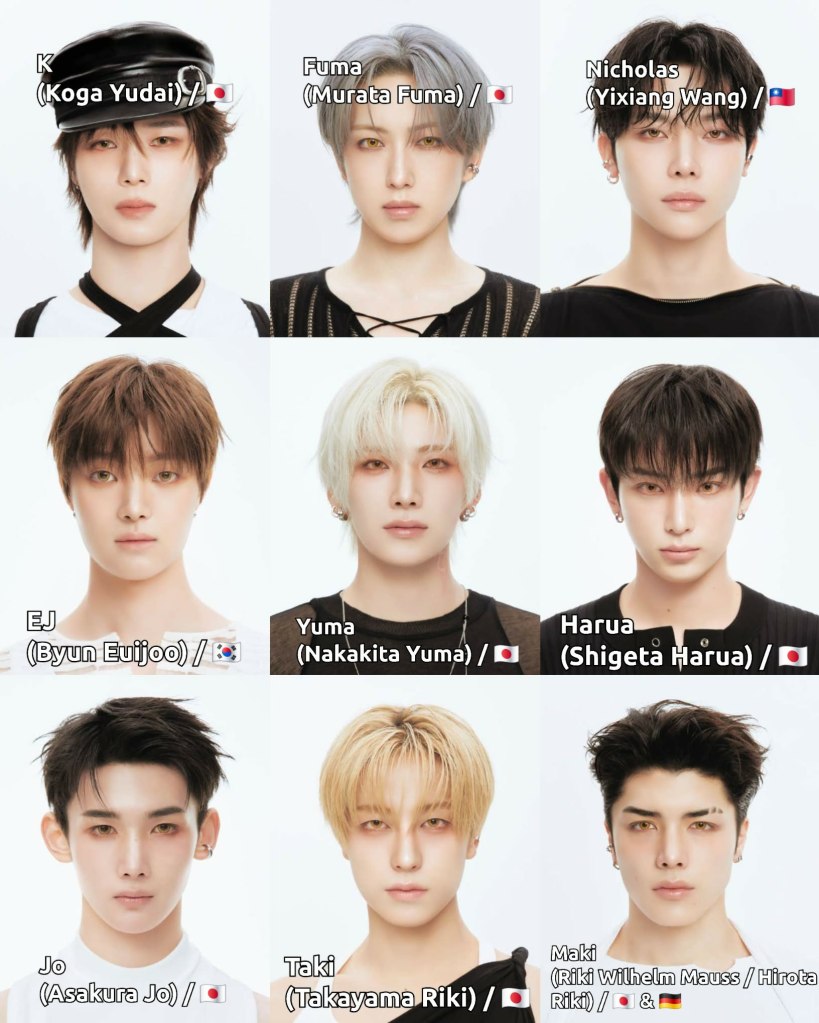
Editor’s note: The group, &TEAM, are multilingual as well, with the members in 3 countries: 7 born in Japan (K, Fuma, Yuma, Jo, Harua, Taki, and Maki), 1 from Taiwan (Nicholas), and 1 from South Korea (EJ). One member, Maki, is half Japanese (his mother’s side) and half German (his father’s side). Both Maki and Nicholas can speak several languages: Nicholas speaks Mandarin Chinese, Korean, Japanese, and English, though he claims he isn’t good in either language. While Maki speaks Japanese, Korean, and German. All 9 members of &TEAM, except Nicholas and Maki, are learning English to communicate with fans, LUNÉ, in the States.
From their December 2022 debut through 2026, &TEAM achieved major commercial milestones. They established international chart presence by accumulating over a million album sales across their discography, securing high-visibility festival slots like KCON LA, and becoming the first Japanese group to perform and present a program at the Grammy Museum in Los Angeles (OSEN, 2025; Choi, 2026). At the same time, the group maintained a deliberate domestic strategy to build grassroots market penetration across Japan.
The Legacy of the Survival Show: Trust and Collaboration Over Competition
Analyzing &TEAM’s group dynamics requires examining the structural roots of the Japanese idol audition format. Emerging in the 1990s, before the widespread global adoption of televised auditions, early Japanese formats prioritized narrative growth, personal development, and public engagement over high-stakes rivalry (大園百合子, 2026).
&AUDITION – The Howling (2022) integrated this foundational approach with modern production standards. Building around core trainees K, Nicholas, EJ, and Taki—who established initial public visibility on I-LAND—the program replaced aggressive elimination mechanics with team-based objectives. This structural emphasis on collective achievement fostered a foundational culture of trust that continues to shape the group’s synchronized performance chemistry, public image, and thematic focus on unity (大園百合子, 2026).

Key Insight: By prioritizing shared objectives over intra-group elimination, &AUDITION established a collaborative framework that directly informs &TEAM’s operational cohesion and stage presentation today.
International Milestones and Domestic Market Dynamics: Despite rapid overseas adoption, &TEAM faced a common challenge in globalized music models: international digital visibility does not automatically translate into universal domestic household awareness. During their debut year, international sales reached approximately 200,312 copies compared to 300,000 domestic units in Japan. International streaming metrics accounted for roughly 65 percent of overall activity, accompanied by overseas social media followings nearly double their domestic count.
These metrics illustrate the operational gap between global reach and domestic saturation. Japan remains the world’s second-largest music market, shaped by unique distribution channels and consumer habits (Stoll, 2025). Unlike markets heavily dependent on algorithmic streaming, Japan still relies heavily on physical media, CD release events, legacy broadcast networks, and direct regional engagement (菜保 et al., 2023). To build market depth, it needs direct physical presence and sustained regional promotional tours beyond primary hubs like Tokyo and Osaka.


(&TEAM at the Grammy Museum on August 2026)
Key Releases & Performance Metrics (2025–2026)
- Go in Blind (3rd Japanese Single, April 2025): Reached RIAJ Million certification (1,000,000+ units), securing their first million-seller status and ranking #9 on Oricon’s Annual Single chart (OSEN, 2026).
- Back to Life (1st Korean Mini-Album, October 28, 2025): Marked their official South Korean debut, exceeding 1.1 million units on release day and topping the Oricon Daily Album chart (OSEN, 2025).
- Yukiakari (2nd Japanese Full Album, Late 2025): Accumulated combined sales of 1,354,000+ units alongside Back to Life in Q4 2025, ranking #12 on Oricon’s Annual Album chart.
- We on Fire (3rd Japanese Mini-Album, April 2026): Recorded 1,200,000+ global sales, serving as their third consecutive overall million-seller (OSEN, 2026).
- Mark on Me (2nd Korean Mini-Album, September 8, 2026): Set a new career record by selling 1.2 million copies on day one and reaching 1.36 million units in first-week sales (KPOP Daily, 2026).
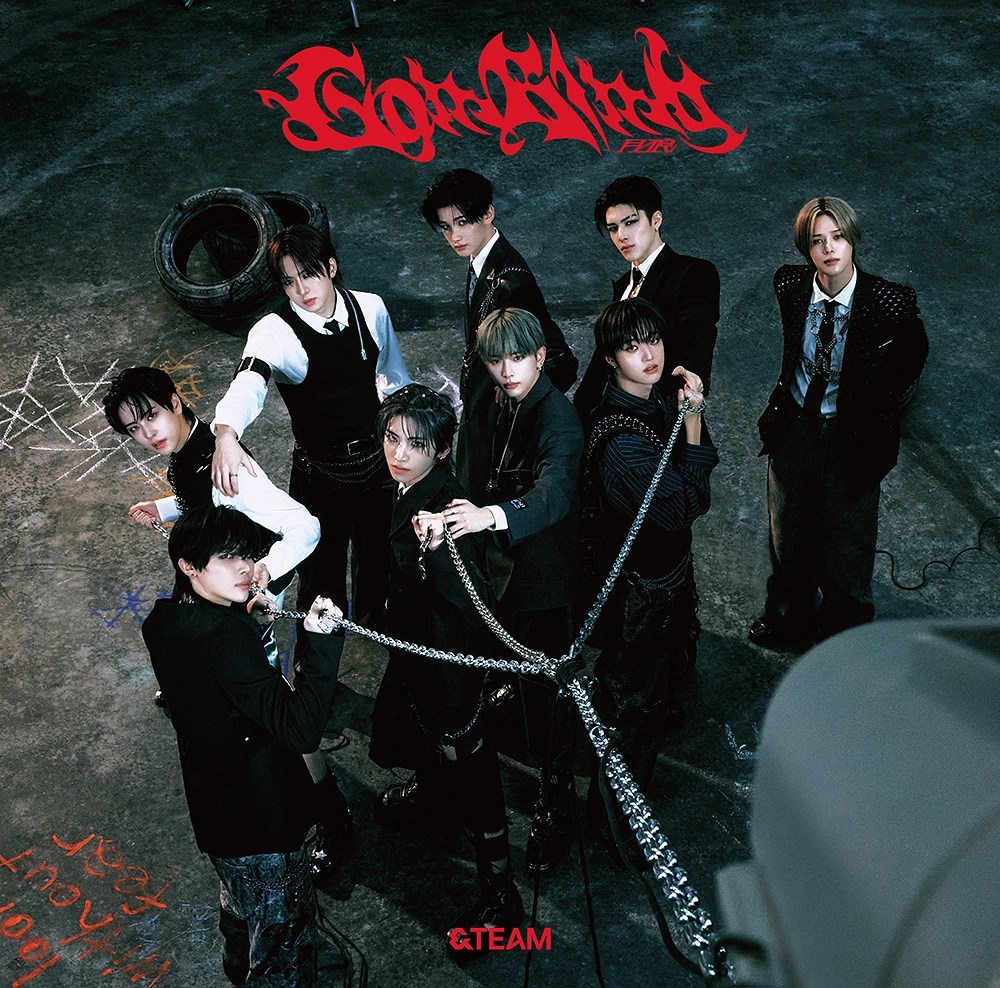


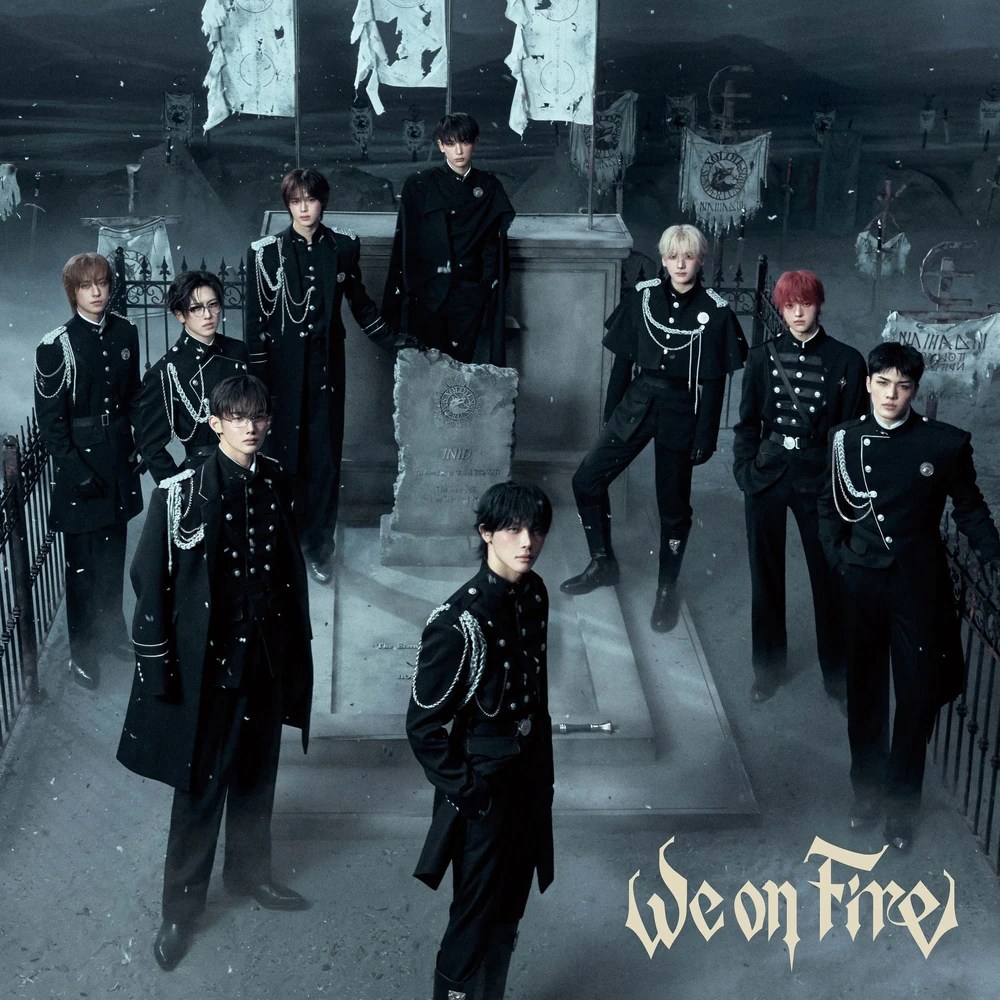
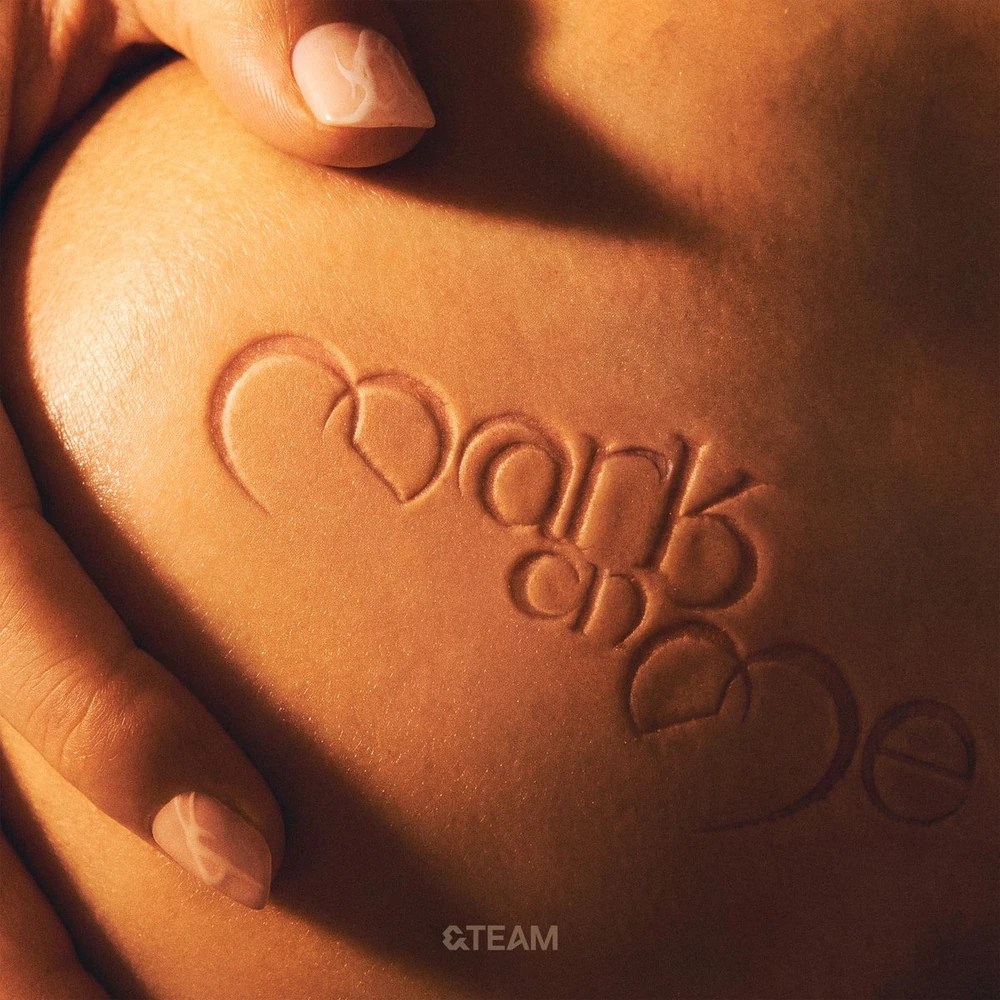
Comparative Analysis: Market Strategies across Japan, South Korea, and the U.S.
Operating simultaneously across three major commercial territories requires targeted operational strategies aligned with regional consumer behavior.
| Market Region | Core Focus & Drivers | Key Success Factors |
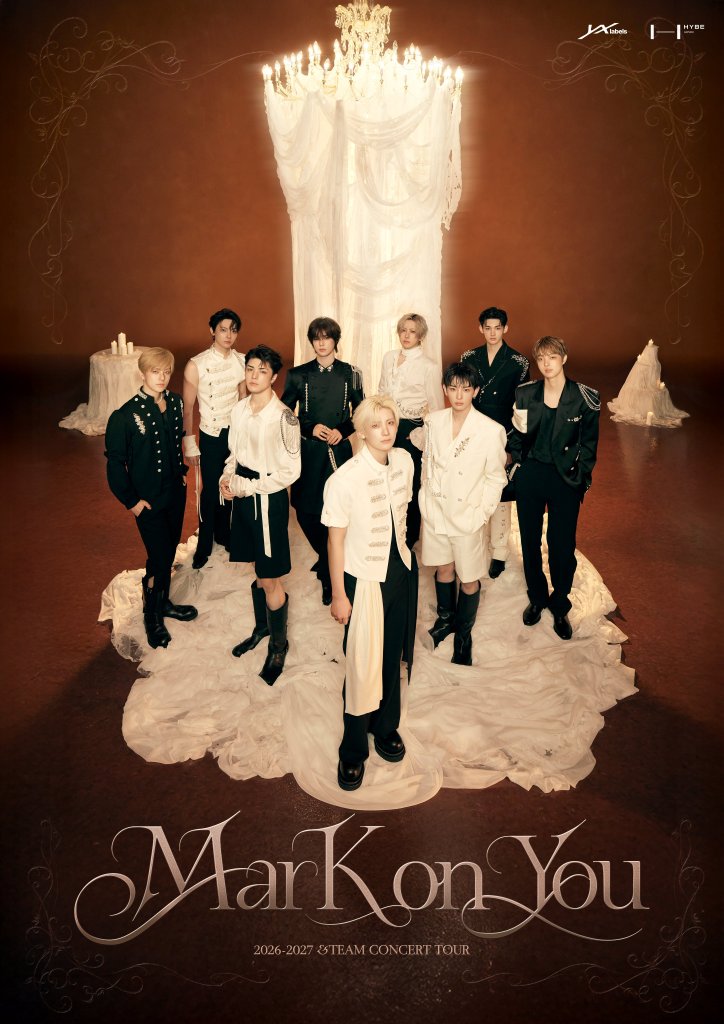
| Japan | Physical CDs, regional penetration, local TV broadcasts, long-term brand equity. | Nationwide tours (Mark on You), prefectural engagement, physical fan events. |
| South Korea | Digital streaming charts, broadcast music show wins, high visual output, rapid release cycles. | Synchronized choreography, native-language media engagement, high-density promotions. |
| United States | Global playlist curation, viral social reach, festival stages, arena tours. | High-impact festival sets (KCON LA), landmark cultural appearances (Grammy Museum). |

Conclusion
&TEAM’s trajectory from 2022 through 2026 demonstrates the viability of a hybrid global-local strategy. By leveraging survival show narrative equity, securing overseas milestones, and systematically engaging domestic audiences via the nationwide Mark on You tour, the group has constructed a dual-market foundation. Following the release of their Korean mini-album Mark on Me, their continued expansion into Japanese arena venues positions &TEAM as a primary case study for cross-border idol localization.
———————————-
References
Choi, J. (2026, July 16). &TEAM to Appear on Grammy Museum’s ‘Global Spin Live’… Full-Scale Global Push. CBC News. https://cbcglobe.com/en/articles/2026/07/17/team-to-appear-on-grammy-museum-s-global-spin-live-full-scal-d7e9cbc7
KPOP Daily. (2026, September 8). &TEAM Breaks 1st-Day Sales Record With “Mark on Me” MillionSeller. https://kpop.andxo.com/article/team-breaks-1st-day-sales-record-as-mark-on-me-becomes-milli/
OSEN. (2025, November 11). &TEAM earns double platinum in Japan for Korean debut album. ChosunBiz. https://biz.chosun.com/en/en-entertainment/2025/11/12/TPQ56FQ2FVGGBKXMBLTRGIUFB4/?outputType=amp
OSEN. (2026, April 21). &TEAM sells 1.09 million copies on release day, becomes three-time million seller. ChosunBiz. https://biz.chosun.com/en/en-entertainment/2026/04/22/C4H3BA3NPJBYNAMHO5O7JXOTKU/?outputType=amp
Stoll, J. (2025). Music industry in Japan: Statistics and facts. Statista. https://www.statista.com/topics/9053/music-industry-in-japan/
大園百合子. (2026, June 7). アイドル・オーディション番組は社会を映すか〖座談会・前編〗. HBF CROSS. https://www.hbf.or.jp/magazine/18061/
菜保, 小., 泰一, 浜. & 怜子, 町. (2023). アイドルを対象としたファンツーリズムの開催地の特性および地域住民とファンの相互関係。 日本観光研究学会全国大会学術論文集, 38:2023.12, pp. 171-176. https://doi.org/10.18979/jitrproceedings.38.0_171
Photos were found on Google, YouTube, and X (Twitter)
 from daydreams to screen time
Leave a comment